Published Sept. 21, 2026
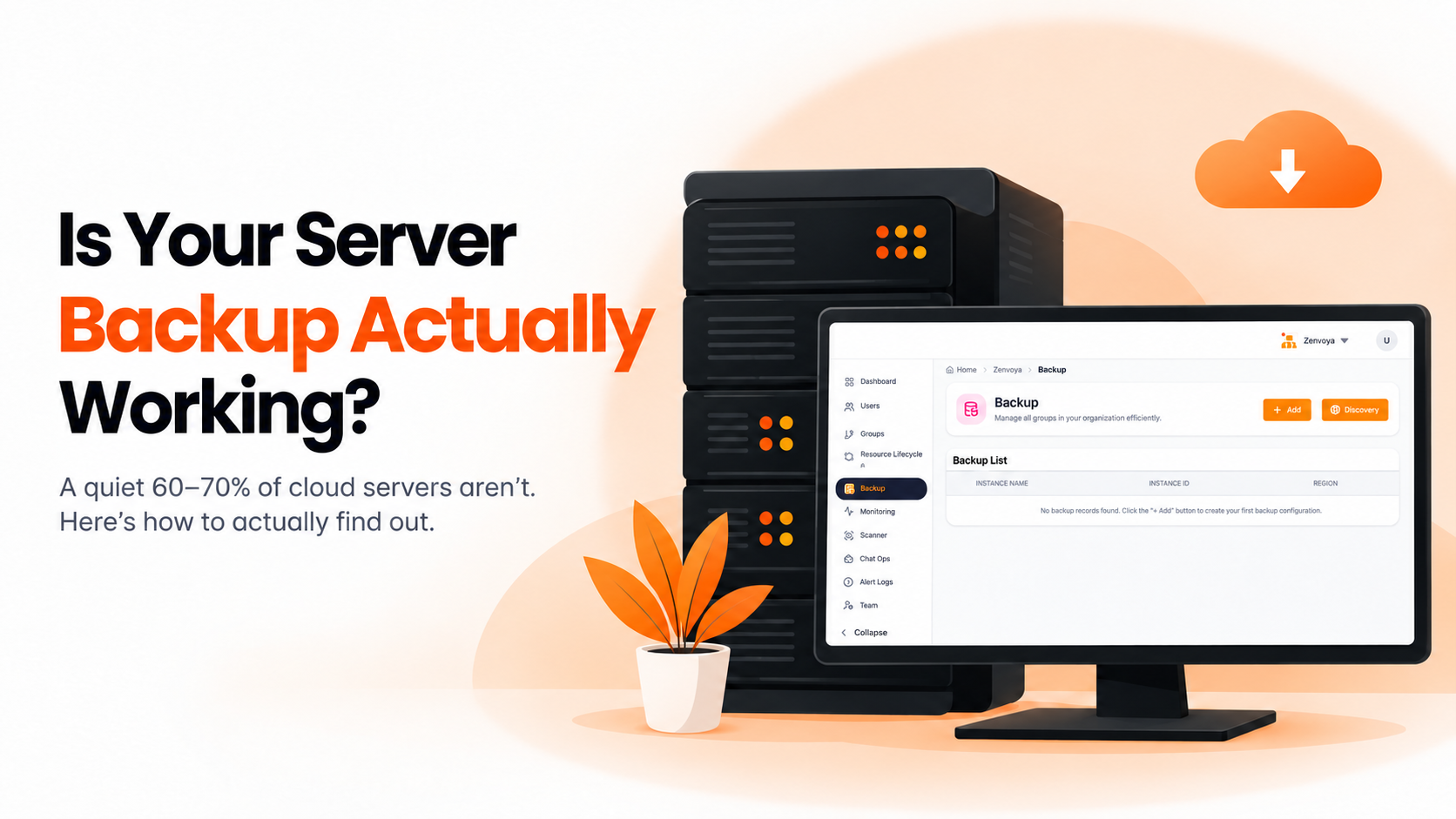
Here's an uncomfortable number: in a large share of cloud environments, somewhere in the range of sixty to seventy percent, at least one server is not actually being backed up the way everyone assumes it is. Not because anyone decided backups didn't matter, but because a backup job was configured once, quietly stopped working at some point, and nobody was watching closely enough to notice. The server looks fine. The dashboard shows green. And the actual backup hasn't run in weeks or months.
The reason this happens so often comes down to priority. Security and backup hygiene are the kind of thing every team agrees is important in principle, and almost every team deprioritizes in practice, because there's always something more urgent in front of it. A feature deadline, a production incident, a client escalation. Backup verification doesn't have a natural trigger that forces someone to check it, so it quietly falls to the bottom of the list, and stays there until something forces the issue.
The moment most companies actually discover a backup gap is during a VAPT, a vulnerability assessment and penetration test. And that's a real problem, because VAPT isn't a continuous process. Realistically, only a small fraction of companies, something like ten percent, run these audits with any regularity at all, and even the ones that do typically run them every six months, once a year, or once every two years.
Think about what that means in practice. If a backup job silently breaks the week after a VAPT concludes, that gap can sit there completely undetected for the better part of a year, sometimes longer, until the next audit cycle happens to catch it. In the best case, that's an embarrassing finding in a report. In the worst case, it's the reason a company has no way to recover data after a server failure, a ransomware incident, or a bad deployment that wipes out something critical. Finding out your backups weren't running is a very different experience when you find out from an audit report versus when you find out because you actually needed to restore something and couldn't.
This is really the core issue: VAPT was never designed to be a safety net for backup health. It's a point-in-time security assessment, and treating it as your only check on backups means you're only as safe as the gap between audits, which for most companies is measured in months, not days.
The traditional fix for this is a manual verification drill, done on a set schedule, usually monthly. Someone on the team is assigned to go through the list of servers, check that the backup jobs are configured, confirm the last successful run timestamp, and maybe even attempt a test restore to prove the backup is actually usable and not just technically "completing."
This works, in the sense that a disciplined team following this process consistently will catch gaps faster than waiting for the next VAPT. But it depends entirely on that discipline holding up every single month, indefinitely, across every server in the environment. New servers get added and sometimes skip the first cycle. The person responsible for the drill goes on leave, or changes roles, and the checklist quietly stops happening for a quarter. It's a good process on paper that tends to erode in practice, precisely because it's manual, unglamorous, and competes for time against everything else on someone's plate that week.
The alternative is having something else watch this continuously instead of relying on a person to remember to check. This is the core idea behind Bigbell's Backup Management approach to backup management, and it's worth being specific about what it actually does differently from a typical backup tool.
Most backup tools focus entirely on scheduling: set up a job, define a frequency, and the tool runs it faithfully from then on. That's necessary, but it assumes the job is already correctly configured on every server that needs one. What it doesn't do is tell you about the server nobody ever set a backup job on in the first place, or the job that was configured months ago and has since started silently failing without anyone getting an alert.
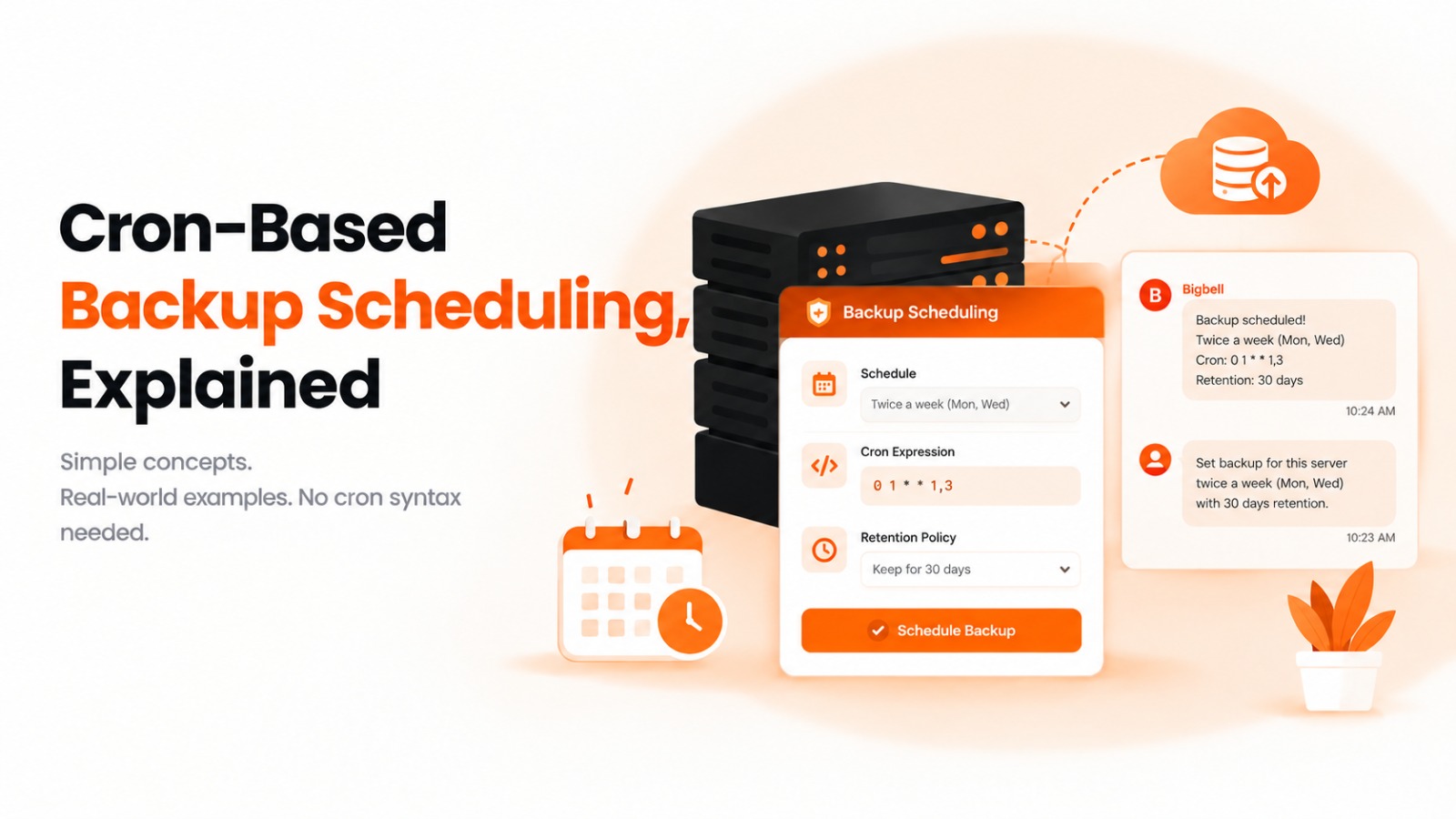
Bigbell does both halves of this. It identifies servers where backup isn't happening at all, whether that's because it was never configured or because it broke at some point without anyone noticing, and it separately lets you schedule backups directly through chat once a gap is found, using standard cron-format scheduling instead of digging through a separate backup console to fix it. The detection and the fix live in the same workflow, so finding a gap and closing it isn't two separate projects handled by two different tools.
If your environment is small and stable, a disciplined monthly drill can work, at least for a while. But most environments aren't static. Servers get spun up for a project and forgotten about once the project ends. Someone changes a backup configuration during a migration and doesn't circle back to verify it actually stuck. The larger and more dynamic the environment, the less realistic it is to expect a manual checklist to catch every gap on every server, every month, indefinitely, without a single missed cycle.
The practical difference between the two options isn't about whether backups matter, everyone already agrees they do. It's about whether you find out about a gap during a routine check next week, or eighteen months from now during a VAPT, or worse, during an actual incident when it's already too late to matter. Continuous, automated detection closes that window from over a year down to effectively zero.
Backup gaps and security misconfigurations tend to get discovered the same way, and for the same reason: periodic audits instead of continuous checking. It's worth pairing backup gap detection with something like Bigbell's Cloud Security Scanner, which applies the same continuous-monitoring logic to configuration issues like open ports, missing MFA, and inactive users that would otherwise also sit undetected until the next VAPT cycle happens to surface them.
You can also look at how to set up Linux server monitoring as part of a broader approach to continuously monitoring your infrastructure.
You can see the full Bigbell Backup Management workflow, including gap detection and chat-based scheduling, on the Bigbell Backup Management page.